Tokyo's small-hotel scene runs on conviction, not chains. These five properties — each under 100 rooms, each shaped by a single, uncompromising design vision — are the boutique stays our editors send friends to first.
What makes a Tokyo boutique hotel work
Tokyo's hotel market is dominated by chains for a reason: land is scarce, regulations punishing, and the operating margins on independent hotels notoriously thin. The hotels that survive — and the rare ones that thrive — do so because they answer a question no chain bothers to ask. K5 asks what it would feel like to live inside a Stockholm-Tokyo collaboration set in a 1923 bank. MUJI Hotel Ginza asks what forty years of product design knowledge translates to in hospitality. TRUNK YOYOGI PARK asks what the next generation of Shibuya's design crowd actually wants. HOSHINOYA Tokyo asks whether a high-rise can be a real ryokan. Aman Tokyo asks what monasticism feels like at altitude.
Five answers below — each unmistakably its own.
K5 — Stockholm Meets Old Edo
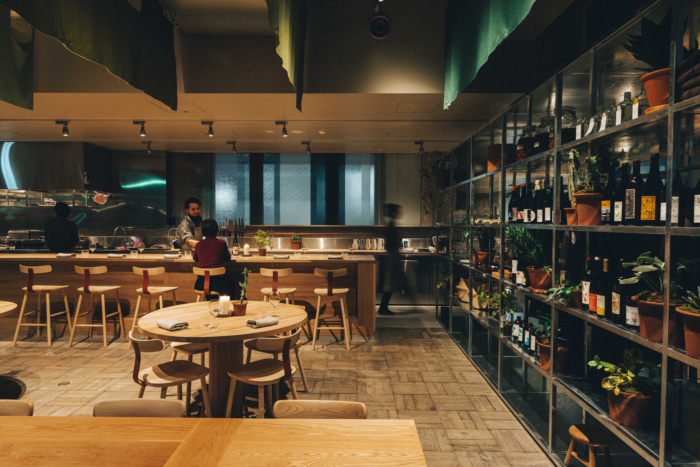
A 1923 former bank vault in Nihonbashi, reimagined in 2020 by Stockholm's Claesson Koivisto Rune. Twenty rooms, deep indigo dyed walls, a craft beer brewery in the basement, and one of the city's best natural-wine bars on the ground floor. The most quietly assured small hotel to open in Tokyo this decade.
K5 occupies the 1923 Heiwa Real Estate Building, a former bank head office in Kabutocho — Tokyo's old financial district, three blocks from the Tokyo Stock Exchange. The Swedish architects kept the original concrete structure, exposed pipework, and cast-iron radiators, layering on hand-dyed indigo walls, custom oak furniture, and a colour palette borrowed from 19th-century Japanese textile dyes. Caveman, the basement craft brewery, pours BREWING bottles brewed on-site. AO bar curates one of Tokyo's most original natural wine lists. Dining at restaurant caveman is a destination in its own right — a young Japanese-Italian kitchen working through wood-fire and seasonal craft.
Book it ifYou want the most quietly assured 20-room hotel in Tokyo, in a financial-district lane the locals are only just rediscovering.
Powered by Booking.com
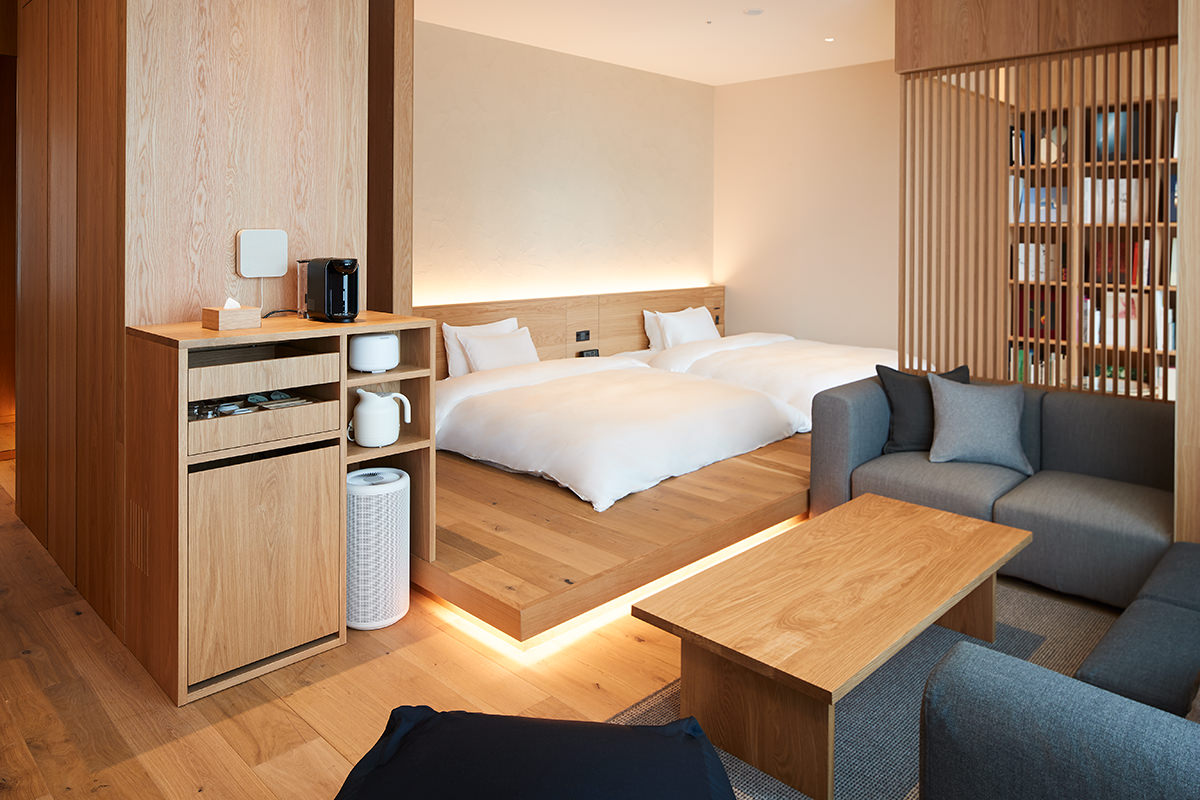
MUJI Hotel Ginza — The Brand Made Habitable
MUJI's first Tokyo hotel — 79 rooms on floors 6–10 of the brand's Ginza flagship, detailed in salvaged Yoshino cedar, repurposed Marunouchi paving stones and unbleached cotton. Forty years of MUJI design philosophy translated, finally, into somewhere you can sleep.
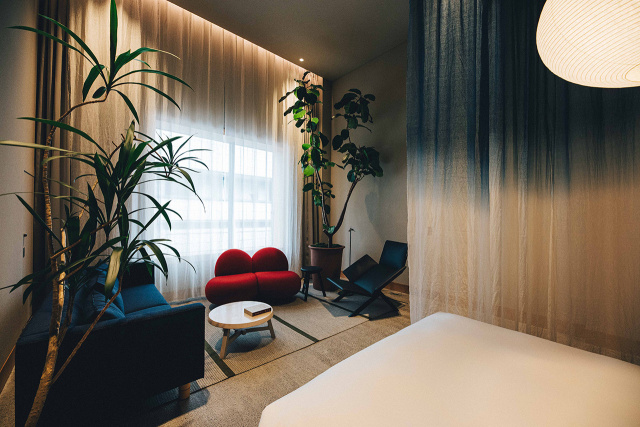
Each of the nine room types tests a different version of MUJI hospitality. Type A is the standard small twin (15 sqm); Type F has a tatami platform under the window; Type I — our pick — gets a sofa-and-library nook beside the bed, lit by a brass MUJI desk lamp. Breakfast in WA Restaurant (¥2,800) is one of the best-value seated set meals in Ginza, drawing on MUJI's farmer relationships. ATELIER MUJI on the sixth floor stages excellent rotating design exhibitions, free to guests. Service is unfussy, the staff dressed in MUJI workwear, and the price-to-design ratio in central Ginza is unbeatable.
Book it ifYou believe a small room done with intention beats a large room done with effort, and Ginza is on the day's plan.
Powered by Booking.com
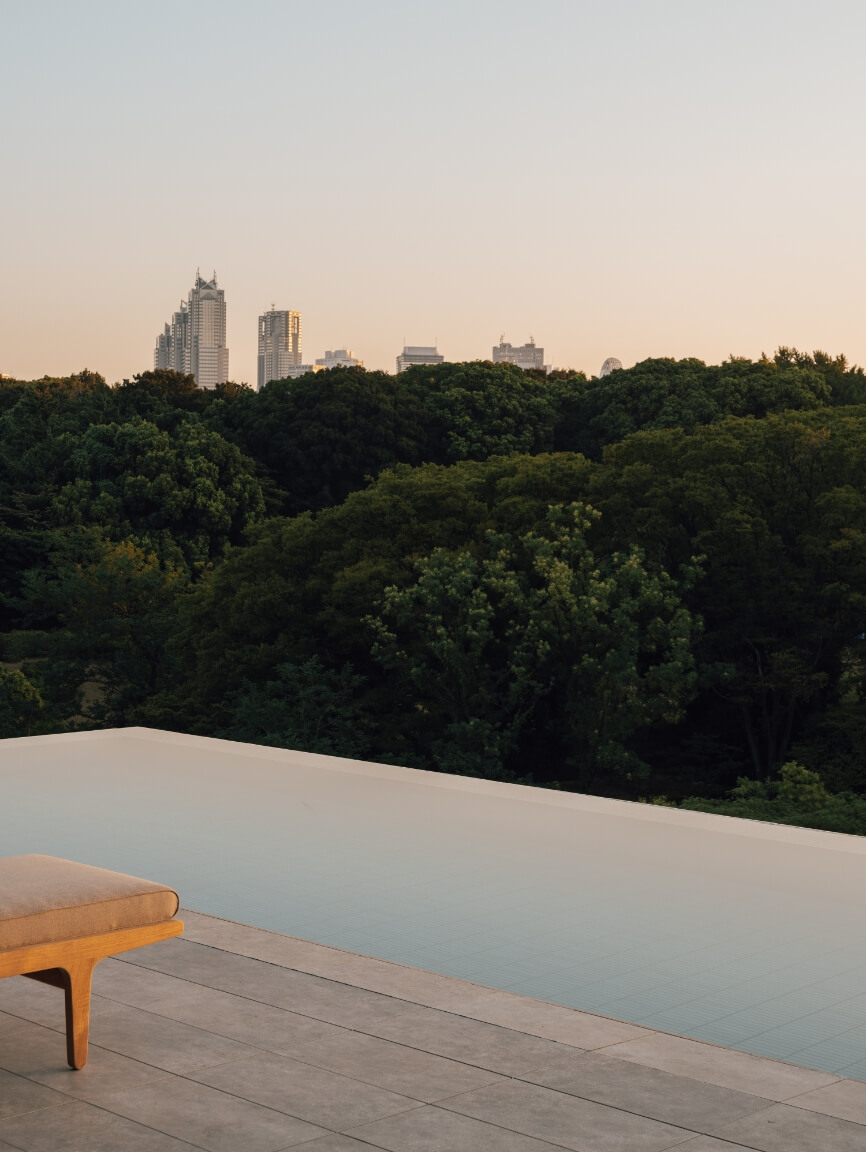
TRUNK(HOTEL) YOYOGI PARK — The Park-Side Sequel
The 25-room sequel to TRUNK Cat Street, opened 2023 and immediately the most considered new boutique hotel in Asia. Keiji Ashizawa wrapped the building in board-marked concrete and salvaged Yoshino cedar; every room faces the western edge of Yoyogi Park.
The headline is the rooftop TRUNK(POOL CLUB), a 25-metre infinity pool above the treetops — Tokyo's only park-view rooftop pool worth booking the hotel for, and members-only outside guest hours so the lane never fills with Instagram traffic. Downstairs, Pizzeria e Trattoria L'OMBELICO is by Mirko Febbrile (ex-Sydney's Fratelli Paradiso). The location — Tomigaya, locals' Oku-Shibuya — gives you walks into the park each morning and Shibuya nightlife ten minutes south. The spa room and gym, both wood-lined and small, are reservation-only.
Book it ifYou want to stay where Tokyo's design crowd actually lives, with a rooftop pool above one of the world's great urban parks.
Powered by Booking.com
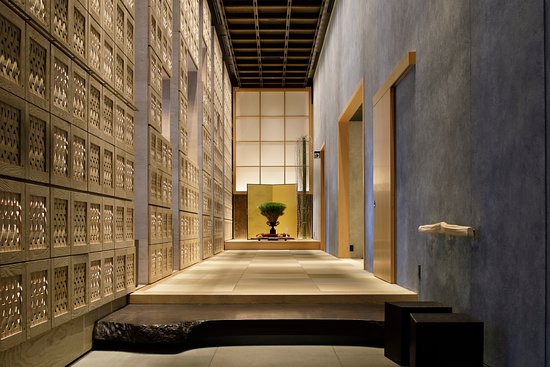
HOSHINOYA Tokyo — The Original Urban Ryokan
A 17-storey ryokan in the financial district. Tatami floors throughout, futons laid each evening, and a real onsen on the top floor fed by water trucked from 1,500 metres beneath Otemachi. The most authentic ryokan stay available without leaving central Tokyo.
HOSHINOYA Tokyo opened in 2016 as Hoshino Resorts' first urban ryokan and remains the format's benchmark. Each floor functions as a 'private floor' with just six rooms sharing a quiet ochanoma tea lounge — there are no public corridors as Western hotels know them, and the silence is real. The 17th-floor open-air onsen, fed by a genuine hot-spring source bored beneath the building, is the only true ryokan onsen in central Tokyo. The kaiseki menu by chef Noriyuki Hamada draws on French technique and Japanese seasonality; reserve well ahead.
Book it ifYou want the ryokan experience without travelling to Hakone or Kyoto, and you trust Hoshino Resorts to do it without compromise.
Powered by Booking.com
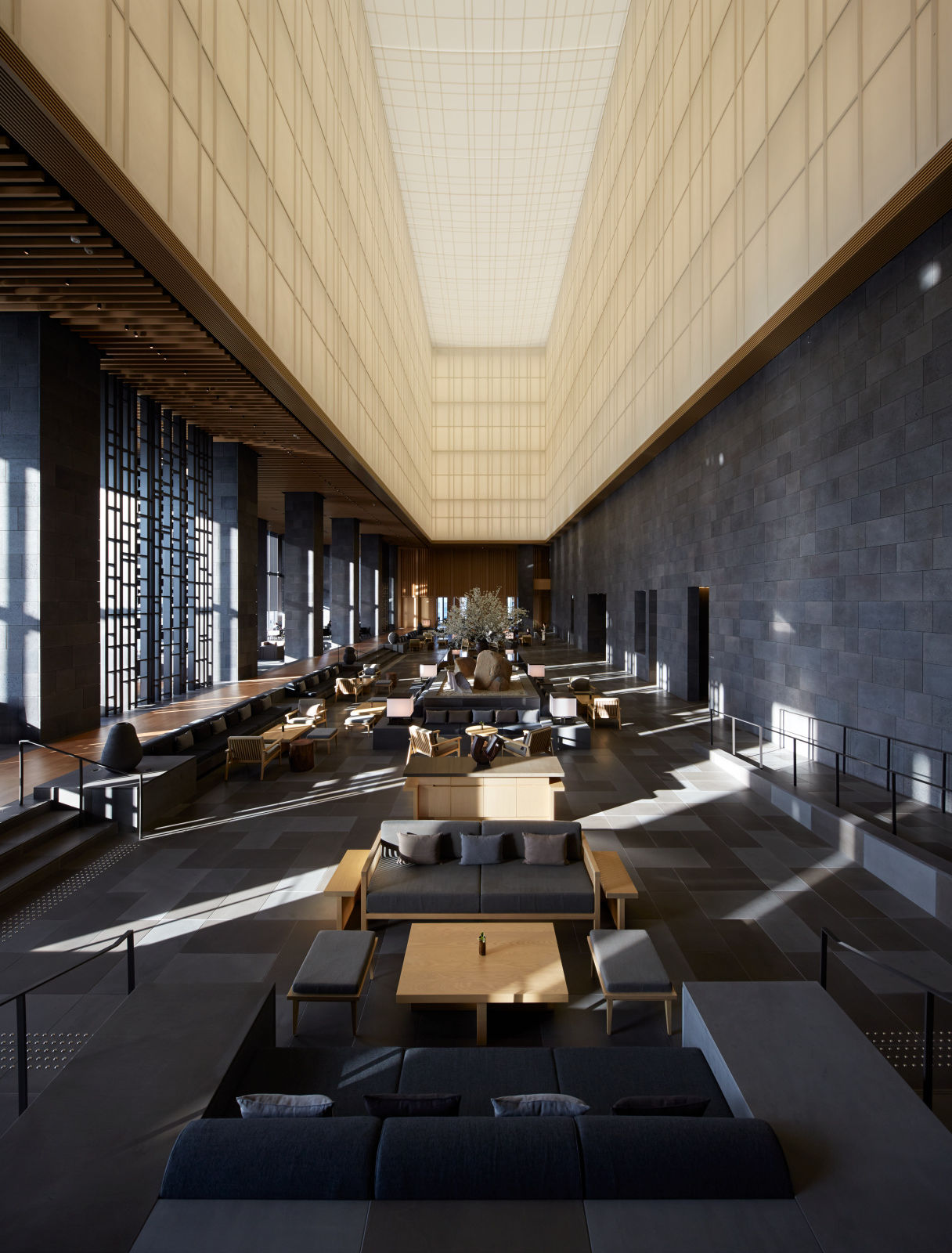
Aman Tokyo — The Sky Sanctuary
Boutique not by room count but by sensibility. Aman Tokyo's six-storey lobby — washi paper, dark stone, ikebana the size of a tree — sets a tone of profound calm before you've even reached your room. The 30-metre indoor pool, lit by a wall of glass facing the city, is perhaps Tokyo's most photographed wellness room.
Aman Tokyo occupies the top six floors of the Otemachi Tower, looking out across the Imperial Palace gardens to Mt Fuji on clear winter mornings. The 84 rooms are the largest of any city Aman, with deep cypress soaking tubs by every window. Dining at Arva (Italian) and Musashi (sushi) is among the city's quietest fine-dining experiences. Forbes Five-Star.
Book it ifYou want Tokyo at its most monastic — silence, sky, and the kind of service where the staff anticipate before you've thought to ask.
Powered by Booking.com
Our verdict
Boutique in Tokyo means committed, not small. K5 and TRUNK YOYOGI PARK are the two most assured new design statements of the past five years. MUJI Hotel Ginza is the brand made habitable. HOSHINOYA Tokyo is the urban ryokan format at its most refined, and Aman Tokyo is what happens when boutique sensibility goes vertical. None of these hotels could exist anywhere else.
Our editors travel extensively to verify every recommendation. All hotel reviews are independent — we accept no payment for editorial coverage.