Marrakech is the most sensory city on earth — a place of extraordinary colour, sound, and scent. Its finest hotels are designed to amplify that experience.
The Medina and the Palmeraie
Marrakech's luxury hotel landscape is divided between two worlds: the medina — the ancient walled city, a UNESCO World Heritage Site, with its souks, mosques, and riads — and the Palmeraie, the palm grove north of the city where the largest resort hotels are located. Each offers a fundamentally different experience.
The medina hotels — La Mamounia, the Royal Mansour, the Amanjena — are embedded in the city's historic fabric, and staying in them means waking to the sound of the muezzin, walking to breakfast through tiled courtyards, and eating dinner in rooms decorated with zellij mosaic and carved stucco. The Palmeraie hotels offer more space, more facilities, and more distance from the city's intensity — a resort experience rather than a cultural immersion.
La Mamounia: The Legend
La Mamounia is the most famous hotel in Africa — a 1923 palace hotel in the medina, set in eight hectares of gardens that were a gift from a Moroccan prince to his son in the 18th century. The hotel has hosted Winston Churchill (who painted its gardens repeatedly), Alfred Hitchcock (who filmed scenes from 'The Man Who Knew Too Much' here), and every significant figure in 20th-century culture who visited Morocco.
The hotel's most recent renovation, completed in 2009 by Jacques Garcia, restored its original Moorish grandeur while adding contemporary facilities — a spa, three pools, and a collection of restaurants that includes the three-Michelin-starred Le Français. The Churchill Bar, named for the hotel's most famous guest, is the finest hotel bar in Morocco.
Royal Mansour: The King's Hotel
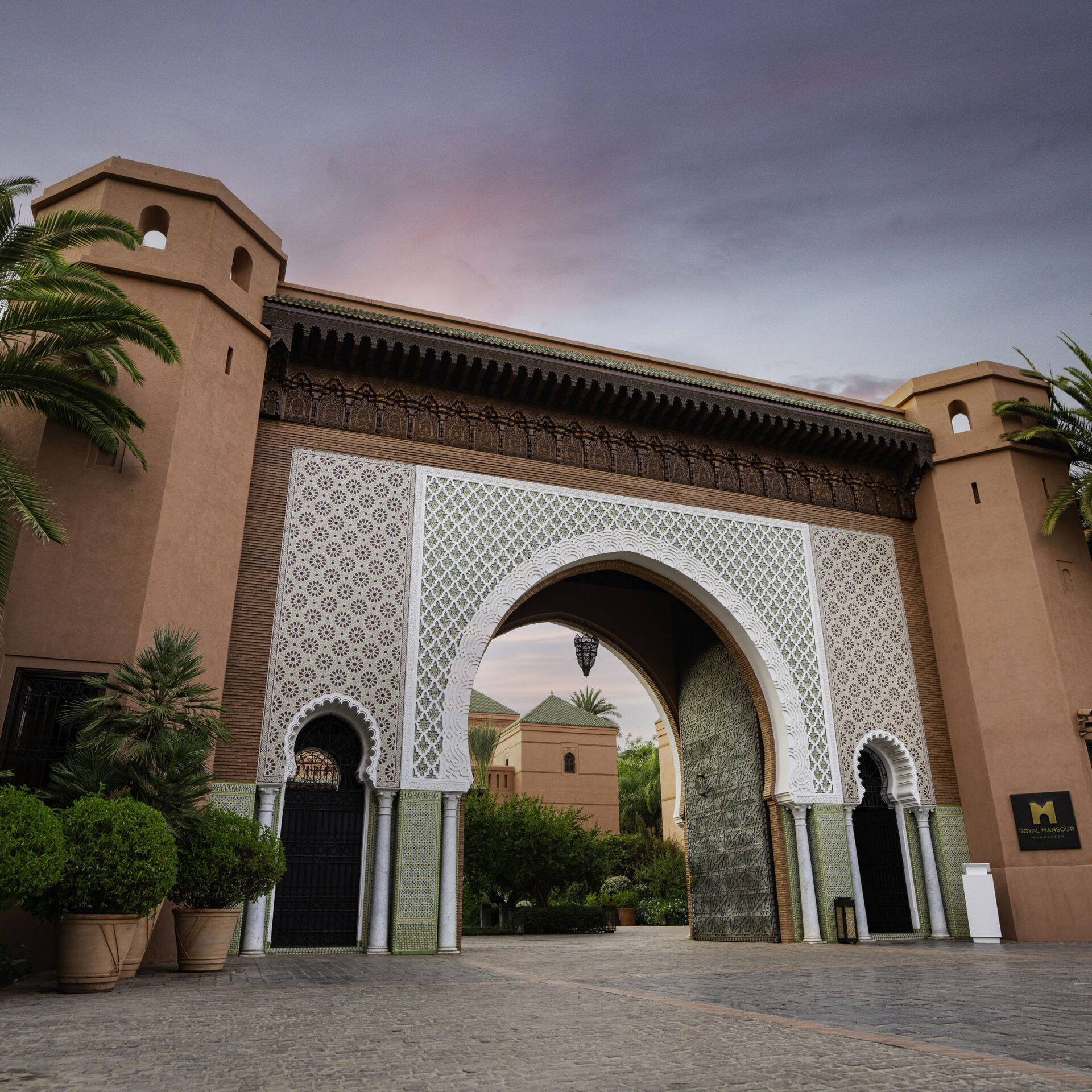
The Royal Mansour is the most extraordinary hotel in Morocco — a private city within the medina, commissioned by King Mohammed VI and opened in 2010. The hotel consists of 53 individual riads, each a private house with its own courtyard, plunge pool, and rooftop terrace, connected by a network of underground passages that allow staff to move invisibly between the riads.
The scale of the Royal Mansour's ambition is difficult to comprehend without visiting: 1,200 craftsmen worked for three years to create the hotel's interiors, which represent the finest expression of Moroccan decorative arts in the world. The La Grande Table Marocaine restaurant is the finest Moroccan restaurant in the country. The spa, spread across three floors, is the most comprehensive in Marrakech.
The Riad Experience
For guests who want a more intimate and authentic Marrakech experience, the city's finest riads — traditional courtyard houses converted into small luxury hotels — offer an alternative to the grand hotels that is often more memorable. The finest riads in Marrakech — Riad Fes, Dar Ahlam, Riad Kniza — are typically 5 to 10 rooms, with personalised service, private cooking classes, and access to the souks and medina that larger hotels cannot provide.
The riad experience is not for everyone — the medina's narrow streets can be disorienting, the noise of the city is ever-present, and the absence of the facilities of a grand hotel can feel limiting. But for guests who want to understand what Marrakech actually is — rather than a sanitised version of it — a riad stay is essential.
Our editors travel extensively to verify every recommendation. All hotel reviews are independent — we accept no payment for editorial coverage.