Cape Town has Table Mountain, the Atlantic Ocean, the Cape Winelands, and a hotel landscape that matches its extraordinary natural setting. This is where to stay.
The Setting
Cape Town is the most dramatically situated city in the world. Table Mountain — a flat-topped massif rising 1,086 metres above sea level — dominates the city from every angle, its famous 'tablecloth' of cloud rolling over the summit on summer afternoons. The Atlantic Ocean wraps around the Cape Peninsula to the west, offering beaches of extraordinary beauty at Camps Bay, Clifton, and Llandudno. And the Cape Winelands — Stellenbosch, Franschhoek, Paarl — begin just 45 minutes from the city centre.
This combination of mountain, ocean, and wine country creates a hotel landscape of remarkable diversity. The finest hotels in Cape Town are not merely places to sleep — they are platforms for experiencing one of the world's great natural and cultural environments.
Ellerman House: Africa's Finest Small Hotel
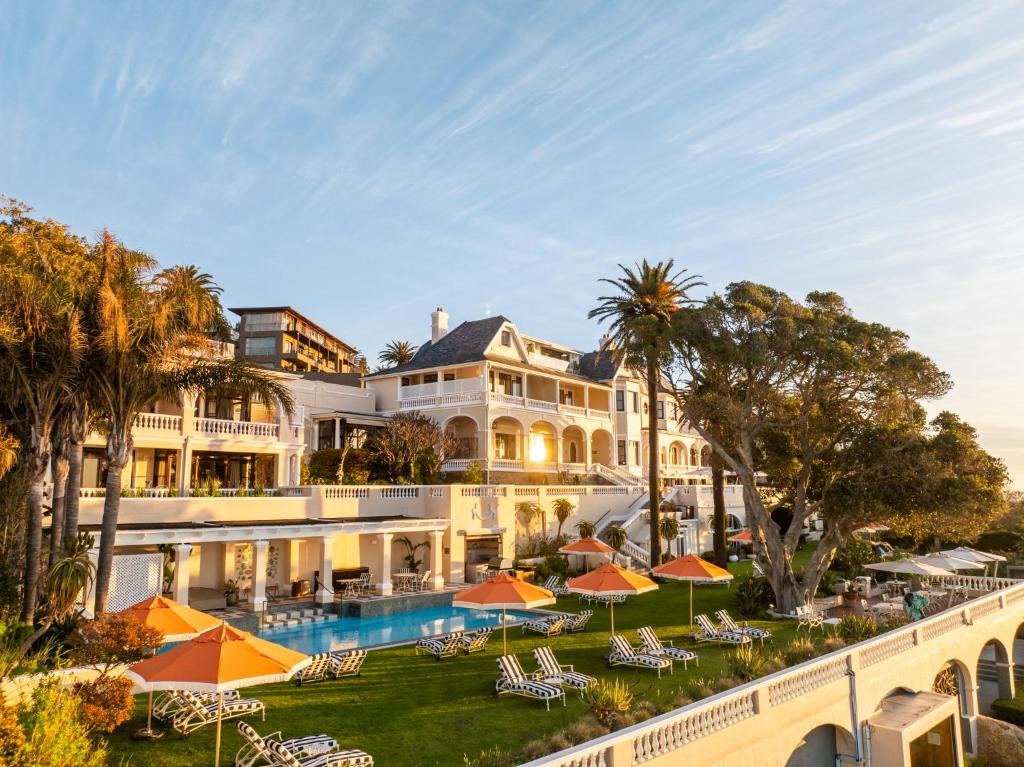
Ellerman House, perched above Bantry Bay with views of Lion's Head and the Atlantic, is the finest small luxury hotel in Africa. The 1912 Edwardian mansion was converted into a hotel in 1992 and has been refined over three decades into something approaching perfection: 13 rooms and suites of extraordinary beauty, a wine cellar containing over 7,000 bottles of South African wine, two swimming pools, and a private art collection that includes works by major South African artists.
The hotel's scale — 13 rooms, a staff-to-guest ratio of approximately 5:1 — creates an experience that is closer to staying in a private house than a hotel. The chef prepares personalised menus for each guest, the sommelier conducts private tastings of the wine collection, and the concierge arranges experiences — private vineyard tours, helicopter flights over the Cape Peninsula, sunset boat trips — that are unavailable to guests of larger hotels.
The Silo: Architecture as Hospitality
The Silo Hotel, which opened in 2017 in a converted grain silo at the V&A Waterfront, is the most architecturally significant hotel in Africa. The conversion, by the Johannesburg firm Heatherwick Studio, transformed the silo's concrete grain elevator into a hotel of extraordinary visual drama — the pillow-shaped windows that bulge from the facade are one of the most recognisable hotel design features in the world.
The hotel's 28 rooms are among the most beautifully designed in Africa, with views of Table Mountain, the harbour, and the city that are unmatched in Cape Town. The hotel sits above the Zeitz Museum of Contemporary Art Africa (MOCAA), making it the cultural heart of the V&A Waterfront. The rooftop pool, accessible to all guests, offers the most dramatic swimming experience in the city.
The Belmond Mount Nelson: The Pink Lady
The Belmond Mount Nelson Hotel — known affectionately as 'The Pink Lady' for its distinctive pink facade — has been Cape Town's most beloved hotel since 1899. Set in nine acres of gardens at the foot of Table Mountain, it has hosted every South African president, most visiting heads of state, and generations of wealthy travellers who regard it as the most civilised address in Africa.
The hotel's afternoon tea, served in the garden on sunny days, is one of Africa's great hotel rituals — a spread of finger sandwiches, scones, and pastries that has been largely unchanged for a century. The Planet Restaurant is one of Cape Town's finest dining rooms. And the hotel's two swimming pools, set in the garden with Table Mountain as a backdrop, create a sense of timeless luxury that no newer hotel in the city can replicate.
Our editors travel extensively to verify every recommendation. All hotel reviews are independent — we accept no payment for editorial coverage.